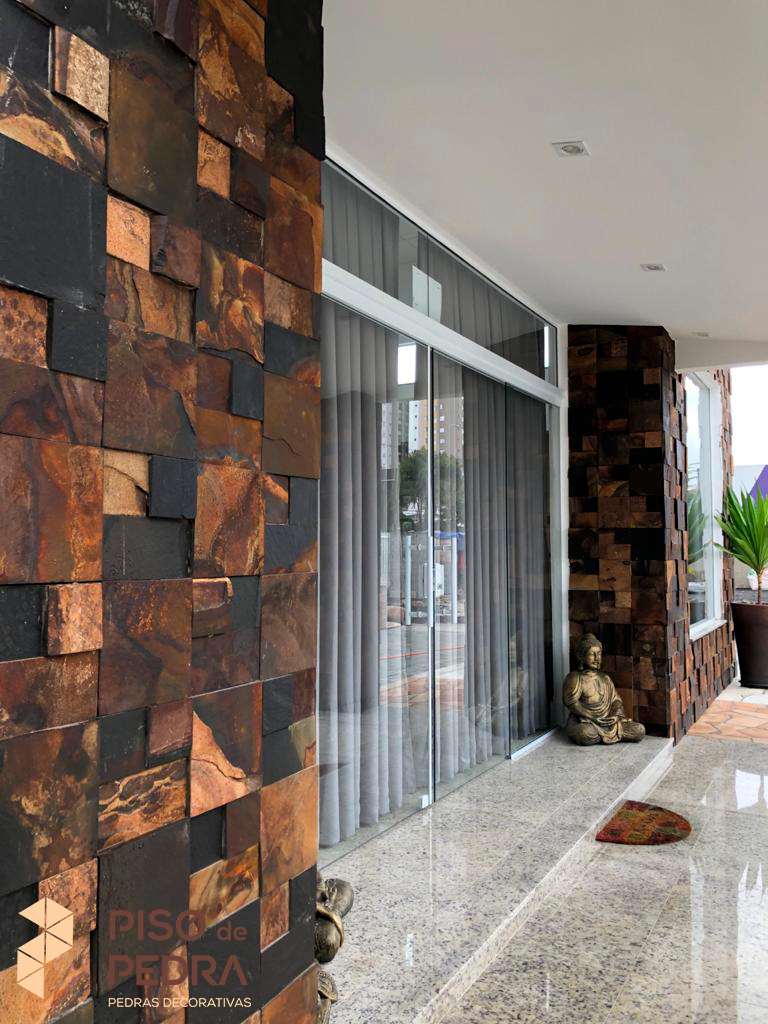
Efflorescence – What should I know?
04/09/2023If you arrived at this article it's probably because you're looking for a solution to that whitish appearance on your natural coating.
This happens more frequently in natural coverings such as iron stone, slate and basalt.
Many customers end up coming to our store, looking for a solution to eliminate this whiteness, blaming the stone or the adhesive mortar for poor quality.
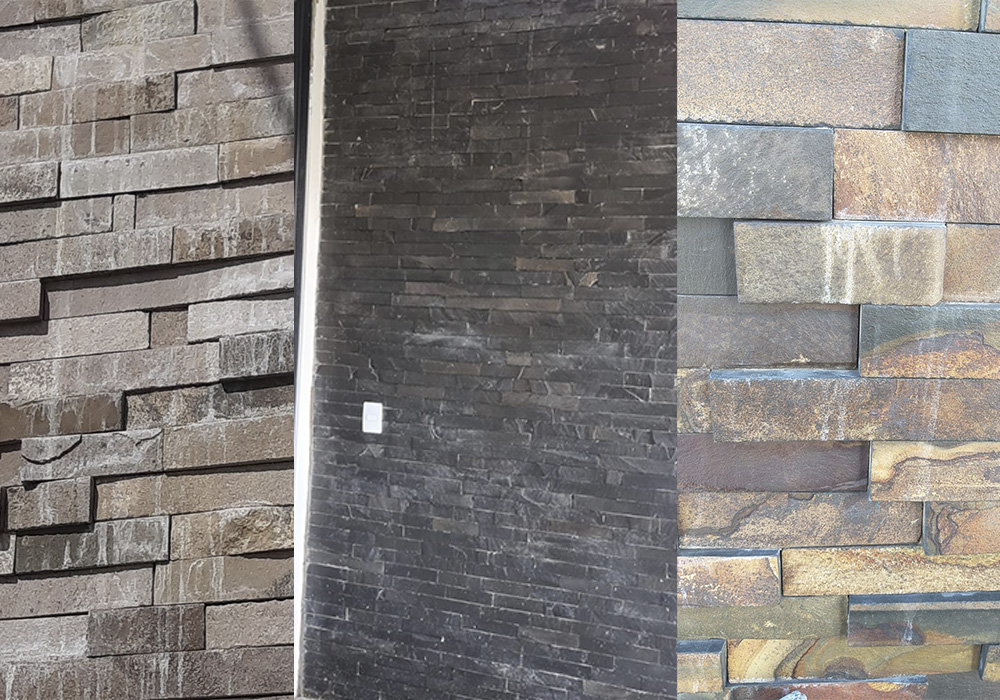
What is Efflorescence?
Efflorescence is a common problem in buildings and also in natural coatings.
The soluble salts that are present in construction materials, putties and mortars dissolve in water and then deposit on the surface, forming these white or off-white spots.
This is not a defect in the stone or mortar you purchased.
To prevent efflorescence on your coating, or reduce it, you can follow these tips:
1. Use quality materials: Choose bricks, blocks and other building materials that are low in soluble salts. Make sure materials meet local quality standards.
2. Prevention during construction: Keep building materials protected from moisture before and during construction. Avoid prolonged exposure to rain or excessive humidity.
3. Adequate waterproofing: Make sure the wall structure has adequate waterproofing to prevent water infiltration.
4. Proper drainage: Ensure the drainage system around the building is working properly to direct water away from the foundation and walls.
5. Adequate ventilation: Promote adequate air circulation within the structure to help dry any accumulated moisture.
6. Avoid using high alkalinity cement: High alkalinity cement may increase the likelihood of efflorescence. Make sure to use the proper cement for the application.
7. Cleaning and maintenance: Regularly clean affected surfaces to remove existing efflorescence. Use a soft-bristled brush and mild soap and water.
8. Application of waterproofing: In some cases, applying sealants to affected surfaces can help prevent efflorescence.
9. Professional follow-up: If efflorescence is a recurring or severe problem, it is advisable to consult a construction professional or civil engineer to assess the situation and recommend specific mitigation measures.
Keep in mind that efflorescence can be a persistent problem in some situations and may require specific approaches depending on local conditions and construction materials used. Therefore, the adequate prevention and maintenance are essential to minimize the occurrence of this problem.
How to remove this “whiteness” from the stone?
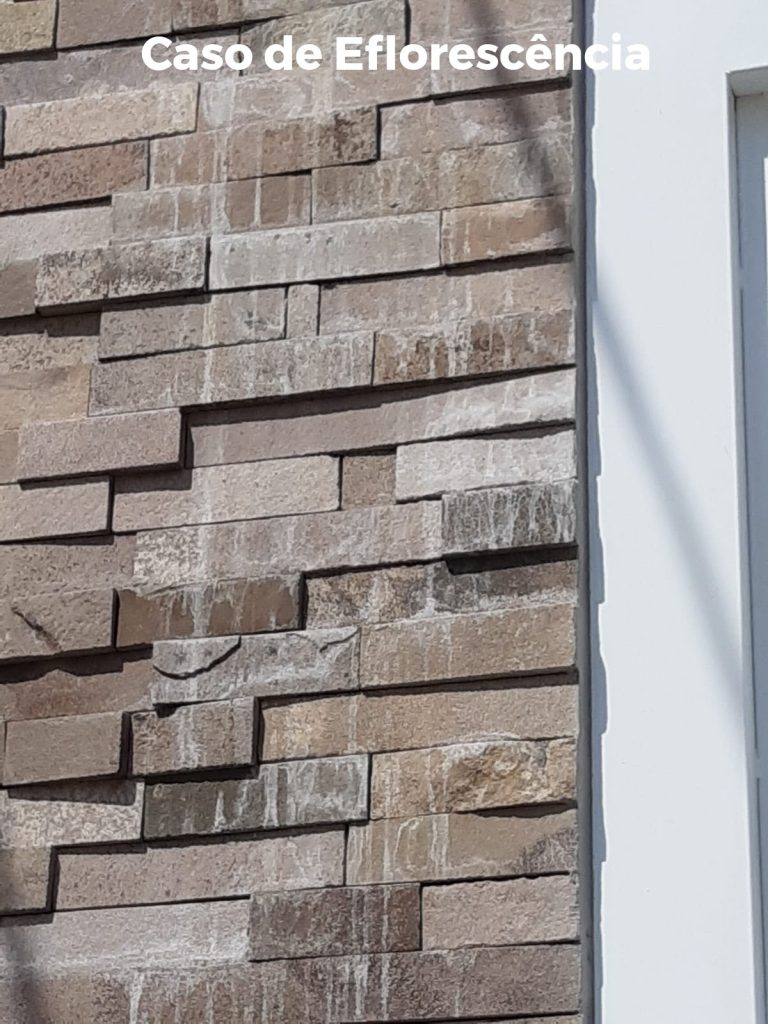
Efflorescence on coverings can be an unwanted stain that can be difficult to remove completely. However, you can try a few steps to minimize or eliminate this efflorescence:
1. Dry brushing: Start by removing loose efflorescence from the surface with a soft-bristled brush, nylon brush or mild abrasive sponge. Be careful not to damage the coating during this process.
In some coatings such as Pedra Ferro, a wire brush can help. Use the brush carefully to avoid scratches on the stone; if this happens, use waterproofing agent to cover them up.
2. Water washing: Use clean water and a sponge or soft cloth to wash the coating surface. This can help remove loose efflorescence residue.
3. Cleaning with muriatic acid (diluted hydrochloric acid): If efflorescence persists, you can try a dilute muriatic acid solution. Mix one part muriatic acid with ten parts water. Wear protective gloves, safety glasses and appropriate clothing when handling muriatic acid.
Apply the solution to the affected area with a soft-bristled brush, then rinse with clean water after a short time. Be careful when using muriatic acid as it is corrosive and can damage the coating if not used properly.
4. Consult a professional: If efflorescence is persistent and removal attempts are unsuccessful, it is advisable to consult a professional cleaner or contractor who has experience dealing with efflorescence on coatings. They can recommend more advanced methods or custom solutions.
It's important to remember that prevention is the best way to deal with efflorescence.
Once efflorescence forms, it can be difficult to remove completely, and it may return if the underlying cause is not addressed. So be sure to address any water infiltration or drainage issues that may be contributing to efflorescence in the first place.
How to waterproof my natural stone?
Waterproofing iron stone, basalt or slate can be an effective way of protecting stone against moisture penetration, staining and efflorescence. Here are the basic steps to waterproof iron stone:
Required materials and equipment:
1. Waterproofing for stones (OIL REFUGANT).;
2. Brush;
3. Protective clothing, gloves and safety glasses.
4. Stone cleaner (optional).
5. Soft bristle brush (optional).
Steps to waterproof iron stone:
1. surface preparation:
– Make sure the iron stone is clean and free from dirt, dust, oil or stains. You can use a gentle stone cleaner and a soft-bristled brush to remove any dirt or stains. Rinse well to remove all dust and dirt from the stone.
2. Choice of waterproofing agent:
– Choose a waterproofing agent suitable for natural stones. You can find waterproofing for Iron Stone, Basalt and Slate in our store. We only indicate the Oleofugante For these stones, we do not recommend acrylic resin.
3. Absorption Test:
– Before applying the waterproofing agent to the entire surface of the stone, carry out an absorption test. Wet a small area of the stone and observe how the water is absorbed. If the water is quickly absorbed, it is a sign that the stone needs waterproofing. The more porous it is, the more the coating will “pull” the product. You can pass as many hands as you think necessary.
4. Application of waterproofing:
– Follow the waterproofing manufacturer’s instructions regarding the ideal application temperature and quantity to be used. Generally, you will apply the waterproofer with a soft brush.
– You can start applying the waterproofing material at the top of the stone and work your way down towards the base. This is also optional.
– Make sure that the waterproofing agent is applied evenly, covering the entire surface of the stone.
– Let the waterproofing product dry according to the manufacturer’s instructions. This usually takes a few hours or days, but it can vary.
5. Application verification:
– After drying, do an absorption test again to check if your stone is now repelling water. If the water is not absorbed, the waterproofing has been successful.
Remember that stone waterproofing is not a one-time process and may need to be reapplied periodically depending on the stone's exposure conditions and the type of waterproofing used.
If the stone is exposed to the sun or in hot areas such as barbecues and fireplaces, it is recommended to apply it annually.
Be sure to follow the manufacturer's recommendations in relation to maintenance and reapplication. Additionally, be careful when handling chemicals and follow all appropriate safety measures during the process.