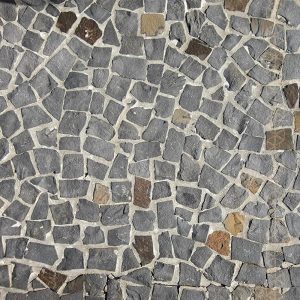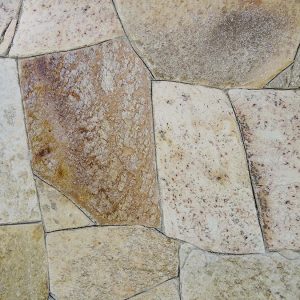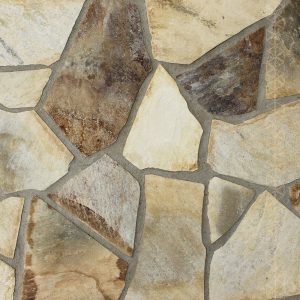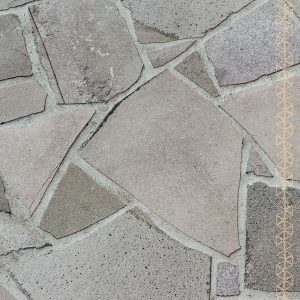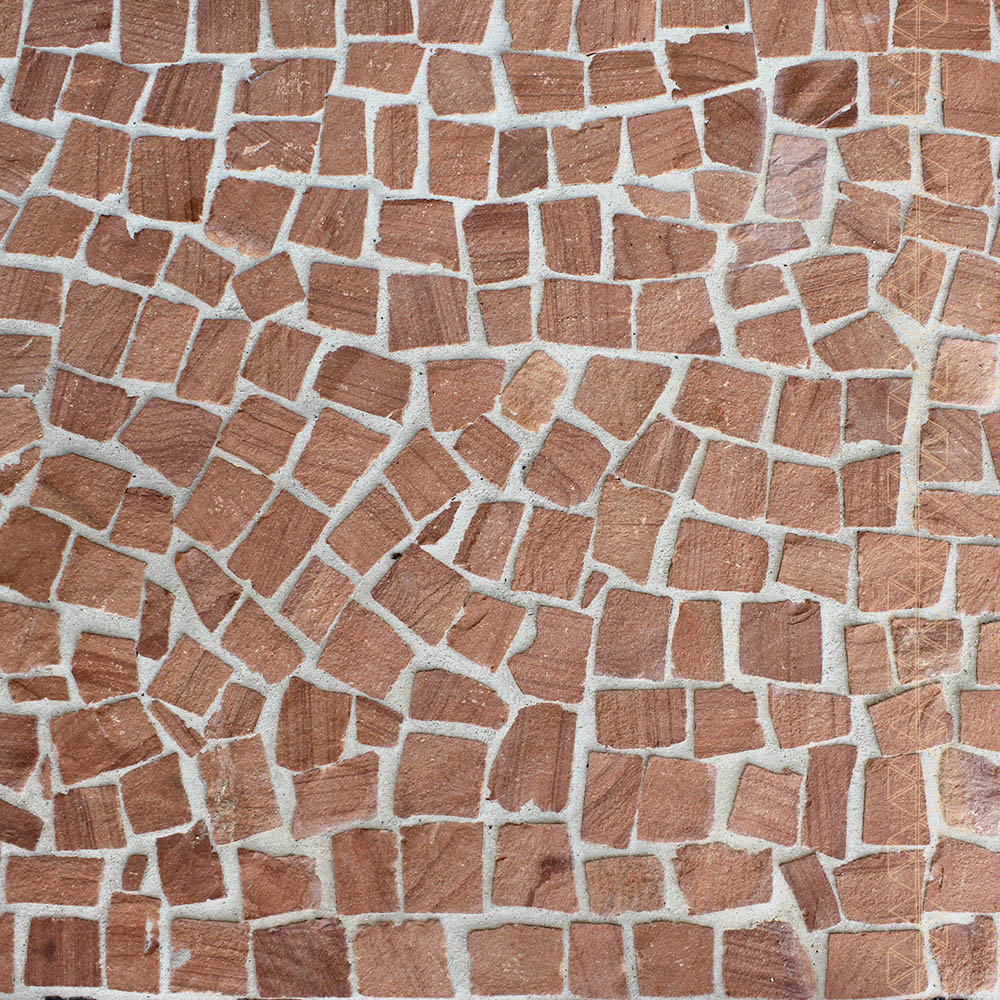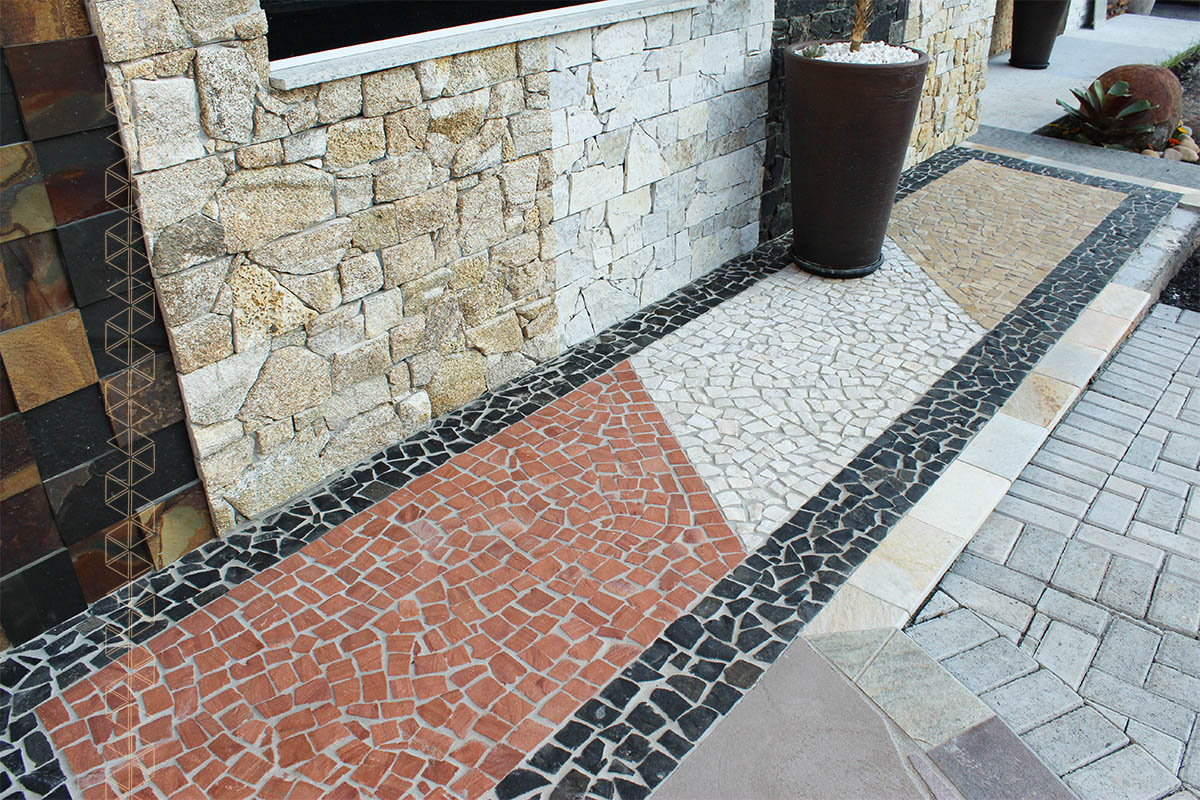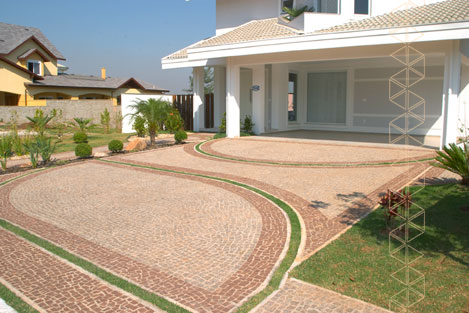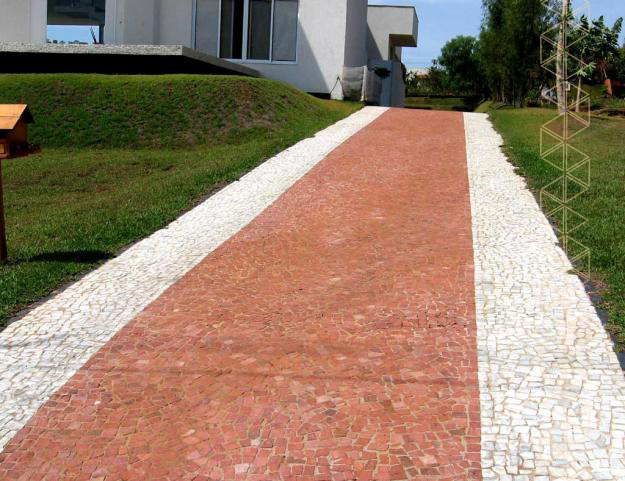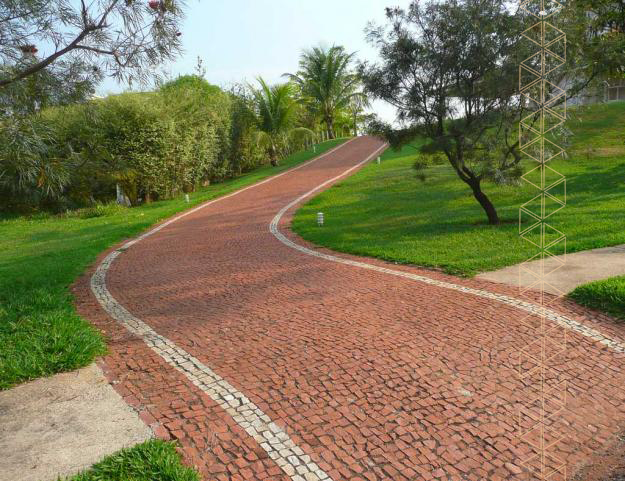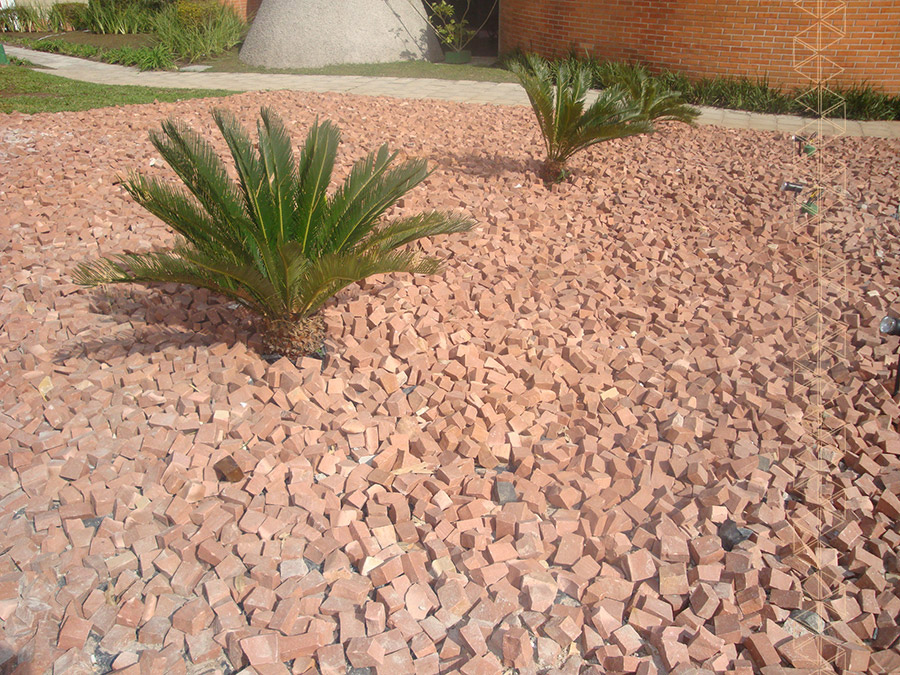
Also known as Petit-Pavé or Portuguese Mosaic, its main characteristic is small stones that when combined with other colors form beautiful designs.
Ideal for covering external floors such as garages, sidewalks, paths with or without subfloor.
Available in our store in Osasco/São Paulo and Curitiba/Paraná.
Portuguese stone, also known as “petit pavé” or “Portuguese cobblestone,” is a paving technique used in Portugal and many other parts of the world. It is a distinctive feature of architecture and urbanism in Portugal, especially in historic cities such as Lisbon, Porto and many others.
Portuguese stone is a type of paving made with small blocks of stone, usually basalt or limestone, that are cut into regular geometric shapes, such as rectangles, squares and parallelograms. These stones are placed side by side and precisely fitted into the ground to create elaborate patterns and decorative designs. The stones are often laid to form mosaic patterns, creating a very aesthetic and traditional look.
This paving technique is known for its durability and strength, making it suitable for high-traffic areas such as sidewalks, squares, patios and streets. Additionally, Portuguese stone is prized for its unique aesthetics, which can range from simple black and white patterns to intricate, colorful designs like red and yellow. The creative arrangement of the stones allows personalized designs and patterns to be created, often representing regional or cultural symbols.
Portuguese stone plays an important role in preserving Portugal's architectural and historical heritage, and is often used to maintain the traditional appearance of old urban areas. It is also popular in contemporary landscaping and architectural projects, where its aesthetic appeal and durability continue to be appreciated.
In addition to Portugal, the Portuguese stone technique has influenced many other places around the world, and is used in several cities on different continents due to its beauty and durability.
Installing Portuguese stone is a detailed job that requires skill and patience. It is advisable to hire experienced professionals if you do not have experience in paving work, as the quality of the installation will influence the durability and aesthetics of the paving.
Yes, Portuguese stone can be used as a coating on different types of surfaces, both indoors and outdoors. It is appreciated not only as a floor, but also as a wall covering, patios, terraces, pool areas, among other spaces.
When using Portuguese stone as cladding, it is important to ensure that the installation is carried out properly to ensure durability and safety. It is recommended that you hire qualified professionals to carry out the work, as they have the experience necessary to create a solid and aesthetically pleasing coating. Additionally, regular maintenance, such as cleaning and sealing, can help preserve the appearance and integrity of the siding over time.
Contact one of our salespeople via WhatsApp to request a quote.
No registered seller.Contact one of our salespeople via WhatsApp.